Blog
How AirDoor Helps Supermarkets Stay Cool During Heatwaves and Reduce the Risk of Fridge Outages

The recent spell of exceptionally hot weather has once again highlighted the challenges facing food retailers as temperatures continue to climb.
Recent reports in the national newspapers and industry press, such as The Grocer, highlighted refrigeration failures affecting supermarkets across the UK during the latest spell of extreme summer temperatures. As heatwaves become more frequent, retailers are increasingly looking for ways to protect refrigerated products, improve customer comfort and reduce the pressure placed on cooling systems.
While refrigeration technology is often the focus, one of the biggest opportunities to improve store performance is frequently overlooked: the entrance.
Every time automatic doors open, warm external air enters the building while cooled air escapes. Throughout a busy trading day this continual exchange of air increases cooling demand, forcing refrigeration and air conditioning systems to work harder to maintain stable temperatures. In a busy supermarket, this happens hundreds, if not thousands, of times every day, with one monitored supermarket having its automatic doors open for 84% of the time.

Why Are Heatwaves Causing More Supermarket Fridge Outages?
Refrigeration systems remove heat from chilled products and transfer it into the surrounding environment.
The warmer the surrounding environment becomes, the harder those systems have to work.
During periods of extreme heat, supermarkets experience several challenges simultaneously:
- Higher outdoor temperatures.
- Warm air continually entering through busy entrances.
- Increased demand on air conditioning systems.
- Greater pressure on refrigerated display cabinets.
- Higher energy consumption throughout the building.
Combined, these factors increase the workload placed on cooling equipment and can contribute to refrigeration alarms, reduced efficiency and, in extreme cases, supermarket fridge outages.
With hotter summers predicted to become more common, reducing unnecessary heat gain is becoming just as important as improving refrigeration itself.
The Hidden Role of the Store Entrance
Retailers have invested heavily in improving refrigeration efficiency, LED lighting, intelligent controls and lower-carbon HVAC systems.
Yet one of the largest sources of unwanted heat gain often remains untreated.
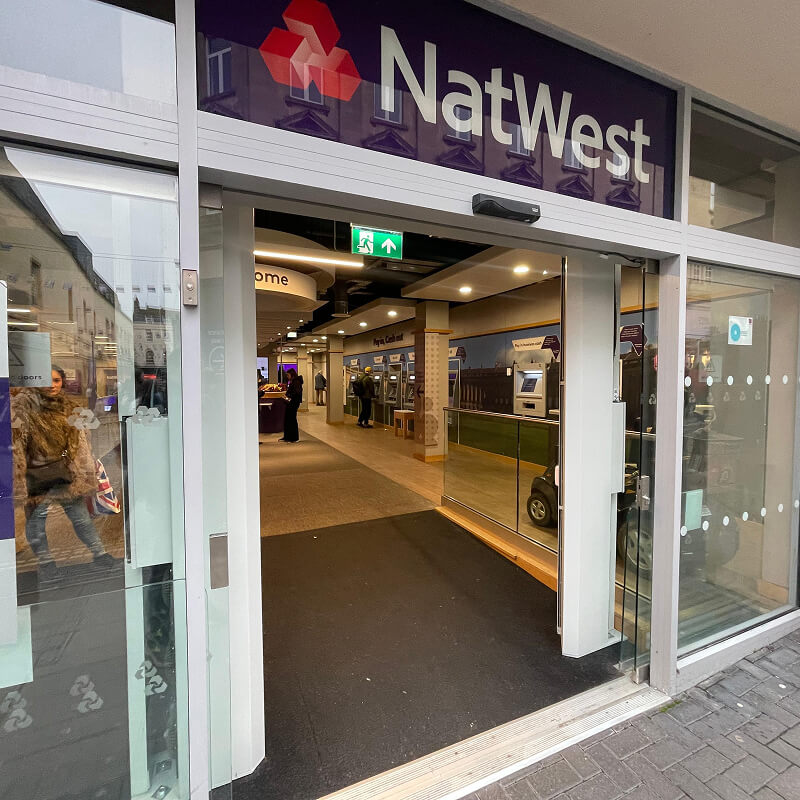
Every opening of a supermarket entrance allows warm air inside while conditioned air leaves the building.
The entrance is one of the few places where the internal environment is directly exposed to external conditions. If that interface isn’t effectively managed, every other system inside the building has to work harder.
That’s why entrance management deserves far greater attention than it has traditionally received.
Traditionally, entrances use over door heaters to provide a plume of heated or cooled air from above the doorway which helps equalise the temperature at the entrance. However savvy retailers are now looking at smart technology that creates invisible air barriers which adapt in real-time to external weather conditions and can stop up to 90% of air infiltration (and escape).
How AirDoor Helps Supermarkets Stay Cool
AirDoor is reimagining the future of commercial entrances.
Rather than acting as a traditional air curtain, AirDoor creates an intelligent, high-performance air barrier across open entrances.
By preventing up to 90% of air infiltration, AirDoor helps keep hot air outside while retaining conditioned air within the building.
The result is a more stable indoor environment that benefits the entire store.
Supporting Refrigeration Performance
More consistent ambient temperatures help refrigerated cabinets maintain performance during periods of extreme heat.
Reducing Cooling Demand
Less hot air entering the building means HVAC systems don’t need to work as hard to maintain comfortable temperatures.
Improving Customer Comfort
Customers experience a cooler, more comfortable shopping environment without physical barriers at the entrance.
Creating Better Working Conditions
Store colleagues benefit from more stable temperatures throughout the day.
Reducing product wastage
By maintaining internal conditions, products last longer, particularly around entrances.
Lowering Energy Consumption
Reducing unnecessary cooling demand can contribute to lower operating costs while supporting wider sustainability goals.
Why AirDoor Complements Existing Refrigeration Systems
AirDoor isn’t a replacement for refrigeration or air conditioning.
It’s a way of helping those systems perform more efficiently.
By reducing heat ingress before it enters the building, refrigeration systems spend less time compensating for unnecessary temperature fluctuations.
This integrated approach allows retailers to maximise the performance of investments they’ve already made in refrigeration, ventilation and intelligent building controls.

Building Climate-Resilient Supermarkets
The UK’s climate is changing.
Periods of extreme summer temperatures are becoming more frequent, making resilience an increasingly important consideration for supermarket operators.
Future-ready stores won’t simply rely on larger cooling systems.
They’ll reduce cooling demand from the outset by improving how the whole building performs.
Managing heat ingress at the entrance is one practical way of achieving this.
By preventing up to 90% of air infiltration, AirDoor helps supermarkets maintain more stable indoor temperatures while improving energy efficiency, customer comfort and operational resilience.
Frequently Asked Questions
Can AirDoor help prevent supermarket fridge outages?
AirDoor supports refrigeration performance by preventing up to 90% of air infiltration through open entrances. By reducing the amount of hot external air entering the building, refrigeration systems can operate within a more stable environment and under lower cooling demand.
Can AirDoor only be installed at customer entrances?
No, AirDoor is just as effective at goods entrances or doors between front and back of house
How does AirDoor improve supermarket energy efficiency?
By reducing heat ingress and helping retain conditioned air, AirDoor reduces the workload placed on air conditioning systems, maintaining temperatures and helping lower energy consumption across the store.
Is AirDoor suitable for supermarkets?
Yes. AirDoor has been designed for busy commercial entrances and is already helping supermarkets, convenience stores and other retail environments improve comfort, reduce energy consumption and create more resilient buildings.
Is AirDoor an alternative to an air curtain?
AirDoor is a next-generation entrance solution that creates a high-performance air barrier across open entrances. Unlike conventional overhead air curtains, AirDoor is designed to provide a more effective seal while allowing unrestricted customer access, without heating or cooling.
Does AirDoor only work in summer?
No, AirDoor is designed to be used year round. It is particularly effective in cold weather where it stops cold external air and wind entering the store.
Discover How AirDoor Can Help Your Supermarket
As retailers continue to prepare for future heatwaves, reducing unnecessary heat gain is becoming an increasingly important part of supermarket design.
AirDoor helps create more comfortable, energy-efficient and climate-resilient stores by preventing up to 90% of air infiltration, supporting supermarket refrigeration performance and reducing cooling demand.
Whether you’re planning a new supermarket, refurbishing an existing store or looking to improve energy efficiency across your estate, AirDoor can help.
Speak to our team today to discover how AirDoor is reimagining the future of commercial entrances.